
Hi everyone! I’m Flávia Victtor dos Anjos, and today I want to share a bit of my recent experience as a guest on a chat about cybersecurity — a topic that, as you’ll see, is far from being just “spy-movie stuff”.
When the Central Bank becomes a target (and why that’s terrifying)
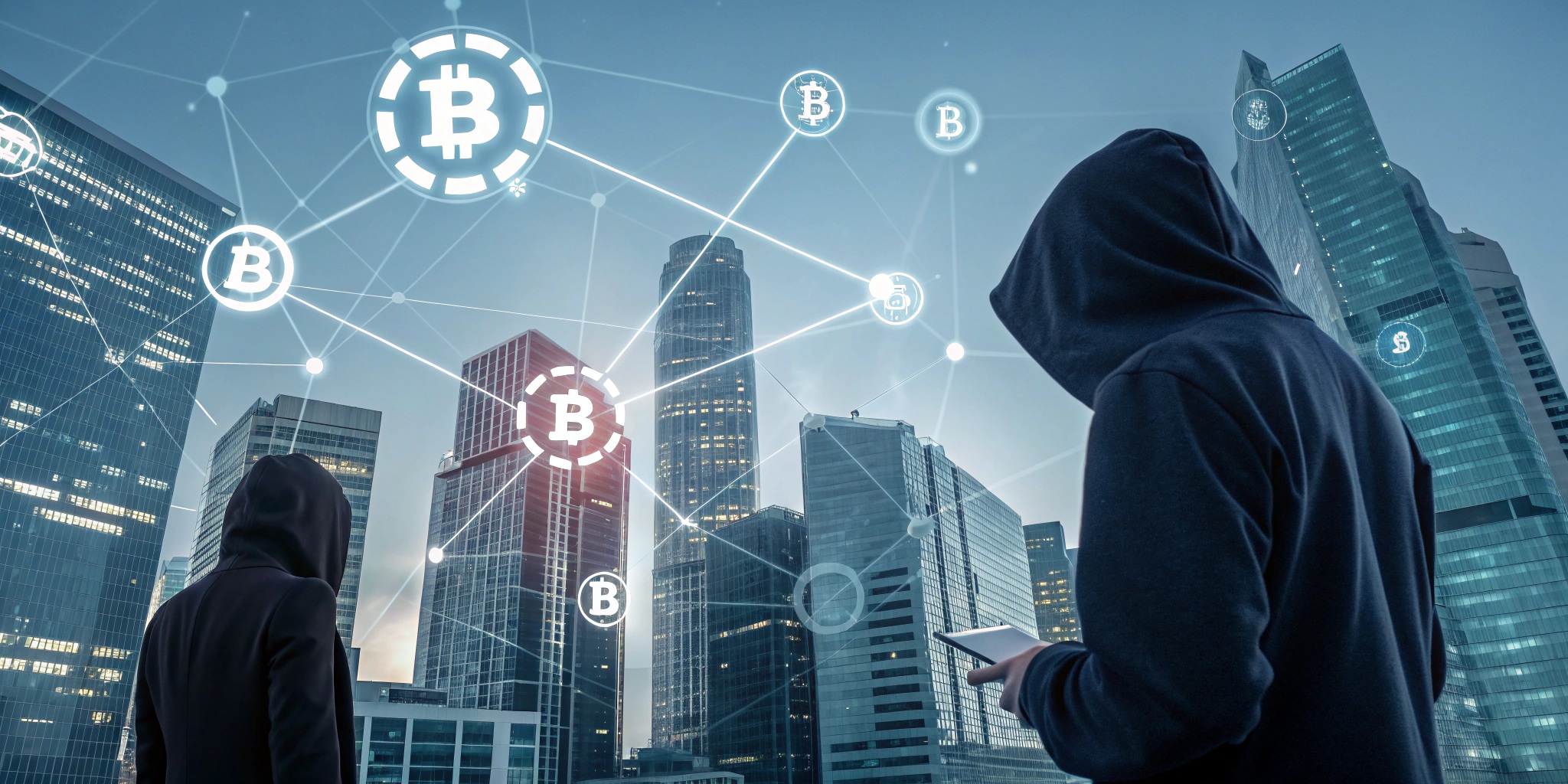
Recently, Brazil’s Central Bank suffered a hacker attack that may have siphoned off as much as R$1 billion. Yes, you read that right: a billion. The target? A company that helps handle data transfers between banks. The good news (if there is any) is that, for now, the end consumer wasn’t affected. But the volume of Bitcoin transactions raised eyebrows — and trust me, I’ve seen something like this before.
What does that teach us? That criminals are watching for any gap, and very often those gaps are exactly where we least expect them.
Cryptocurrencies: the (almost) anonymous paradise for criminals
One of the questions I get most is: “But can you actually trace cryptocurrencies?” The answer is: yes, but it’s not simple. The blockchain validates the transactions, but tracing a suspicious wallet takes advanced tools — and a lot of patience. Companies and banks do invest in insurance and investigative software, yet even so, the trail of illegal money can be pretty winding.
And here’s a spoiler: quantum computing could change the game, but until then, tracing remains an expensive and complex challenge.
And yes, we’re in a digital war. Only, unlike the movies, the enemy often isn’t on the dark web, but right there in your email or on your WhatsApp.
Social engineering: the scam is in the conversation
Here’s a secret: the weakest link in security is almost always the human being. Phishing, deep fakes, calls that record your voice to commit fraud… Criminals love a good, convincing chat. In fact, I’ve seen cases where the criminal was caught not by the tech, but by their own showing off (yes, folks, even hackers slip up).
And if you think only adults fall for this, think again: our startups work on digital education in schools, using playful games to teach children and teenagers how to protect themselves. Because, let’s be honest, nobody is born knowing that an “unmissable offer” might be a scam.
Deep fakes, stolen biometrics and the future of scams
If there’s one thing that worries me, it’s how scams keep evolving. Ever seen those ultra-realistic videos of celebrities saying things they never said? Well, deep fakes are here, and they can be used for large-scale manipulation. And it doesn’t stop there: biometric data (fingerprints, facial recognition) is being copied and sold.
In other words: if it used to be enough not to click on dodgy links, now we have to stay alert even about our own voice.
Conclusion: cybersecurity is a collective challenge
It doesn’t matter whether you’re an ordinary user, a business owner or a public official — digital security is everyone’s problem. The attack on the Central Bank and the use of cryptocurrencies in crime show that no one is immune. But the solution isn’t only in firewalls or strong passwords: it’s in awareness and joint action.
We need to:
- Educate — from children through to adults — about the risks online.
- Strengthen public policy and laws, like the LGPD, to hold criminals accountable.
- Invest in innovation, such as cybersecurity startups, to build smarter defences.
At the end of the day, a safe digital world depends on each and every one of us. Shall we stay alert?